Hato Hub: F&B Digital OS and CRM
Role
Product Designer, Design Systems Lead (Delivery & Dine-In Aggregation)
Scope:
Standardization Strategy, UX Design & Qualitative Research

Hato Hub unifies in-store table ordering (QR Order-to-Pay), direct delivery aggregation via LINE OA, and an enterprise CRM backend into a single cloud ecosystem. Working across a 3-designer team, I scaled internal design velocity through a tokenized design system, overhauled the multi-brand loyalty experience (CRM 2.0), and conducted on-site field research to resolve high-friction table operations during peak dining service.
CRM 2.0 UX Design
Legacy loyalty tools functioned as disjointed digital replicas of physical stamp cards and PDF vouchers. CRM 2.0 closed the loop between in-store visits and LINE OA delivery by embedding loyalty mechanics directly into high-intent ordering flows:
1. Upfront Voucher and Promo Discovery
Moved promotion matching to the very start of the ordering journey. Diners review eligible deals, combo terms, and spending thresholds on a dedicated promo page before building their cart.
Moved promotion matching to the very start of the ordering journey. Diners review eligible deals, combo terms, and spending thresholds on a dedicated promo page before building their cart.
2. Points-to-Perks Redemption
Replaced multi-step reward portals with an in-flow mechanic, allowing diners to convert accumulated points directly into discount vouchers and promotions right inside the platform.
Replaced multi-step reward portals with an in-flow mechanic, allowing diners to convert accumulated points directly into discount vouchers and promotions right inside the platform.

3. Shared Perk Pooling
Solved the group-dining bottleneck where one guest pays the bill while others hold unspent loyalty perks. Dining companions can scan the shared QR code and authorize their personal points or vouchers to discount the primary payer’s tab in real time.
Solved the group-dining bottleneck where one guest pays the bill while others hold unspent loyalty perks. Dining companions can scan the shared QR code and authorize their personal points or vouchers to discount the primary payer’s tab in real time.

4. Contextual Item Recommendations
Connected the recommendation engine directly to CRM member profiles and ordering history, shifting generic upselling into personalized dining discovery, data-informed pairings mechanism leveraging customer order history and table basket contents to surface intelligent, relevant add-ons (such as preferred sauces, garlic rice, or tier-exclusive pairing combos) rather than arbitrary items.
Connected the recommendation engine directly to CRM member profiles and ordering history, shifting generic upselling into personalized dining discovery, data-informed pairings mechanism leveraging customer order history and table basket contents to surface intelligent, relevant add-ons (such as preferred sauces, garlic rice, or tier-exclusive pairing combos) rather than arbitrary items.

Operational UX Research
Context and Objectives: Delivery-App Mental Model Spillover and Credit Card Security Concern:Following a 10-branch digital dine-in rollout with Bar B Q Plaza, live operations revealed two compounding operational and psychological friction points: delivery-app mental model spillover and digital payment anxiety. Diners frequently assumed in-restaurant ordering required immediate upfront payment before food preparation, mirroring off-premise delivery apps. In multiple instances, guests completed payment immediately and subsequently requested item cancellations, raising serious scalability concerns for future nationwide expansions. To de-risk future branch rollouts, the product team conducted a usability study on a redesigned prototype to evaluate whether older, less tech-literate diners could intuitively navigate the deferred "Eat Before Pay" model, trust the in-app credit card flow, and easily discover staff-assisted payment alternatives.
Methodology and SampleFormat:20-minute moderated usability sessions using interactive Figma prototypes (conducted on-site).
Sample Size & Criteria:10 participants aged 47–67 who were low-tech or entirely unfamiliar with QR ordering and food delivery applications.
Sample Size & Criteria:10 participants aged 47–67 who were low-tech or entirely unfamiliar with QR ordering and food delivery applications.
1. "Eat Before Pay" Operational Model
Rather than gating each order behind an upfront checkout, diners submit continuous multi-round orders directly to the Kitchen Display System (KDS), settling their running tab via QR PromptPay or credit card only when finished.
Rather than gating each order behind an upfront checkout, diners submit continuous multi-round orders directly to the Kitchen Display System (KDS), settling their running tab via QR PromptPay or credit card only when finished.

Key Findings: The Mental Model of "Eat Before Pay" Validation
Intuitive Deferred Payment:All ten participants understood they did not need to pay immediately after submitting food orders. None attempted to initiate payment upfront during the ordering phase.
Modal Mental Model:Participants correctly associated the "I’m done eating" modal with settling the bill or routing the final check to the cashier.
2. Privacy-First Card Checkout and Staff Fallback
While usability testing showed high baseline interface trust, older and less tech-literate diners expressed strong anxiety regarding card data retention in mobile browsers. To prevent checkout drop-offs, we made card storage strictly opt-in leaving the "Save card for future visits" toggle unchecked by default, while introducing a prominent "Call Staff for EDC" fallback that lets privacy-conscious guests settle payment at the table with a physical terminal.
While usability testing showed high baseline interface trust, older and less tech-literate diners expressed strong anxiety regarding card data retention in mobile browsers. To prevent checkout drop-offs, we made card storage strictly opt-in leaving the "Save card for future visits" toggle unchecked by default, while introducing a prominent "Call Staff for EDC" fallback that lets privacy-conscious guests settle payment at the table with a physical terminal.

Key Findings
High Interface Trust Scores:Participants rated the perceived trustworthiness of the payment UI between 8 and 10 out of 10.
Opt-In Trust Architecture:Addressed deep-seated user anxiety around device theft and automated data storage by making card retention strictly opt-in. Diners demonstrated substantially greater trust and willingness to enter card numbers when given explicit, proactive control over whether their credentials were saved for future visits.
Predictive Retention Research: AI Discovery and Proactive CRM
Overview and Strategic ObjectiveTo counter steep 30%+ third-party aggregator commissions, enterprise F&B brands must retain repeat diners through owned channels. While Hato Hub possessed rich transactional databases from dine-in QR ordering, POS, and LINE OA delivery, restaurant operators struggled to extract actionable value from their data.
Working alongside in-house UX researchers and product managers, We led product discovery to investigate how predictive intelligence could transform passive CRM logs into proactive customer retention workflows. We conducted discovery interviews with 23 F&B decision-makers (15 enterprise chain marketers and 8 multi-unit SME owners), synthesizing our findings into an interactive high-fidelity enterprise dashboard artifact.
Working alongside in-house UX researchers and product managers, We led product discovery to investigate how predictive intelligence could transform passive CRM logs into proactive customer retention workflows. We conducted discovery interviews with 23 F&B decision-makers (15 enterprise chain marketers and 8 multi-unit SME owners), synthesizing our findings into an interactive high-fidelity enterprise dashboard artifact.
Discovery Research: De-Risking Core HypothesesThrough Lean problem discovery interviews and concept testing across brands like SEEFAH, Yuzu Group, Baan Ying, and Luk Gai Thong, we tested four fundamental business hypotheses:
Hypothesis 1:"Operators want tools to execute daily marketing tasks."→Disproven.
Marketers and owners explicitly stated that manual campaign execution was well within their control. Their critical bottlenecks were data analysis paralysis and creative ideation fatigue. They lacked the specialized data science background to understand customer decay or know what promotion to launch next.
Hypothesis 2:"Acquisition outweighs retention." → Disproven for Enterprise.
While early-stage SMEs sought quick customer acquisition, enterprise chains and established restaurant groups prioritized retaining their hard-earned customer base as their number 1 operational objective.
Hypothesis 3:"Staff-facing AI tools can drive floor upselling." → Rejected by Merchants.
Concepts placing AI recommendation tablets into the hands of service staff met fierce operational pushback. Operators insisted that genuine human hospitality is paramount; forcing servers to look down at screens degraded the guest experience and introduced operational friction amidst high staff turnover.
The Core Need:"AI Marketing & Insights" as the number 1 rated concept.
Participants voted automated marketing intelligence as their highest-priority solution, provided it addressed two enterprise requirements: transparent business logic (accounting for food margins/COGS) and brand-voice fidelity.
The Artifact: Hato AI Marketing and InsightsTo validate feasibility and align engineering on product requirements, the design team designed a multi-surface enterprise web application bridging high-level diagnostic analytics with automated campaign execution:
1. Macro Diagnostics and Revenue Attribution (Overview)
Omnichannel Health Tracking:Aggregated net revenue trends, average bill size, visit frequency, and days since last visit across individual branches, dayparts, and days of the week.
Multivariate Operational Heatmaps:Cross-referenced dining room rush hours, member age/gender distributions, and channel splits (POS Dine-In vs. Takeaway vs. Delivery) to pinpoint revenue leaks.

2. 12-Cohort Lifecycle Segmentation (RFM Intelligence)Automated Behavioral Clustering:Replaced manual SQL queries with an automated 12-cohort RFM model (Potential Loyalist, Champions, At-Risk Regulars, About To Lose, Hibernate, etc.).
Granular Cohort Profiles:Surfaced segment-specific metrics (basket size, visit intervals, top-ordered menu items), giving operators clear operational definitions of churn risk.
Granular Cohort Profiles:Surfaced segment-specific metrics (basket size, visit intervals, top-ordered menu items), giving operators clear operational definitions of churn risk.


3. Human-in-the-Loop Recommendation EnginePrioritized Action Queue:Automatically ranked marketing interventions by projected revenue yield (1st–5th Priority), pairing each proposal with transparent business reasoning (e.g., "Highest spending segment with frequent visits; tailored promotion drives off-peak weekend volume").
Interactive Steering (Reideate):Granted operators direct control over suggestions, allowing marketers to cycle through menu pairings, adjust promotional mechanisms, or recalibrate parameters rather than accepting a black-box output.
Interactive Steering (Reideate):Granted operators direct control over suggestions, allowing marketers to cycle through menu pairings, adjust promotional mechanisms, or recalibrate parameters rather than accepting a black-box output.

4. End-to-End Promotion and LINE Broadcast AuthoringStreamlined 3-Step Creator:Integrated campaign copy generation, automated LINE OA message drafting, broadcast scheduling, and conditional reward rules (item vs. cart discounts, minimum spend thresholds, validity windows) into a unified creation modal.
Pre-Flight Summary & Closed-Loop Tracking:Provided clear pre-dispatch validation screens, linking directly into active campaign performance tables that attributed gross revenue and redemptions directly to specific automations.
Pre-Flight Summary & Closed-Loop Tracking:Provided clear pre-dispatch validation screens, linking directly into active campaign performance tables that attributed gross revenue and redemptions directly to specific automations.

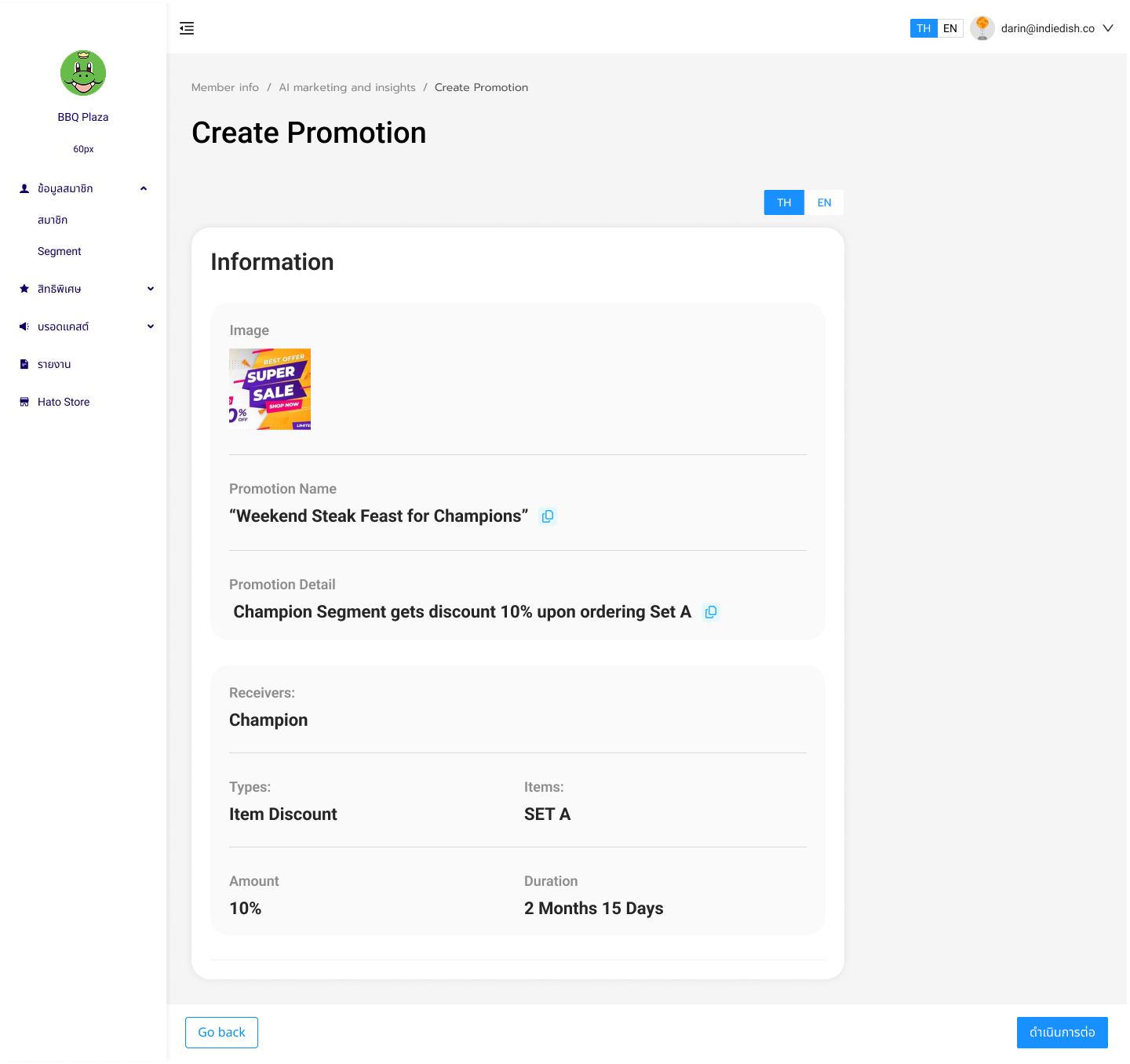

5. Brand-Voice Grounding (Writing Style Configuration)Tone & Vocabulary Calibration:Solved merchant skepticism regarding generic, robotic marketing copy by designing a configuration surface where operators upload brand tone guidelines (Restaurant's writing style.xls). This grounded the generative copy engine in the restaurant's distinct brand voice and promotional vernacular.

Product Impact and Engineering AlignmentBy translating qualitative field research into an interactive, grounded prototype, we transitioned Hato Hub’s product roadmap from a basic reporting tool into an automated retention platform. The artifact eliminated ambiguity for engineering teams by defining the precise data schemas, RFM thresholds, and human-in-the-loop controls required to build enterprise-grade predictive CRM software.
UX Standardization
Custom-building one-off interfaces for each enterprise brand created compounding design debt and delayed client launches. Under the founder’s initiative, I established an operational foundation to unify engineering handoffs, and QA cycles:
1. Tokenized UI Architecture
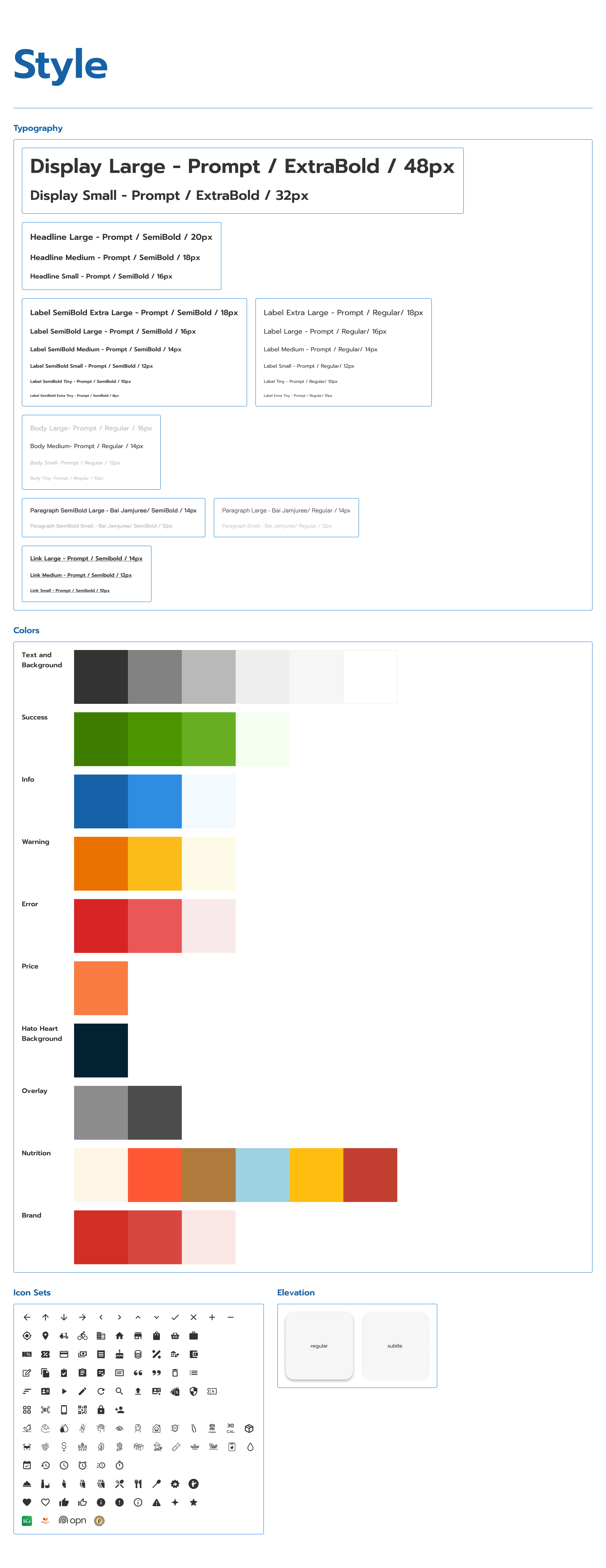
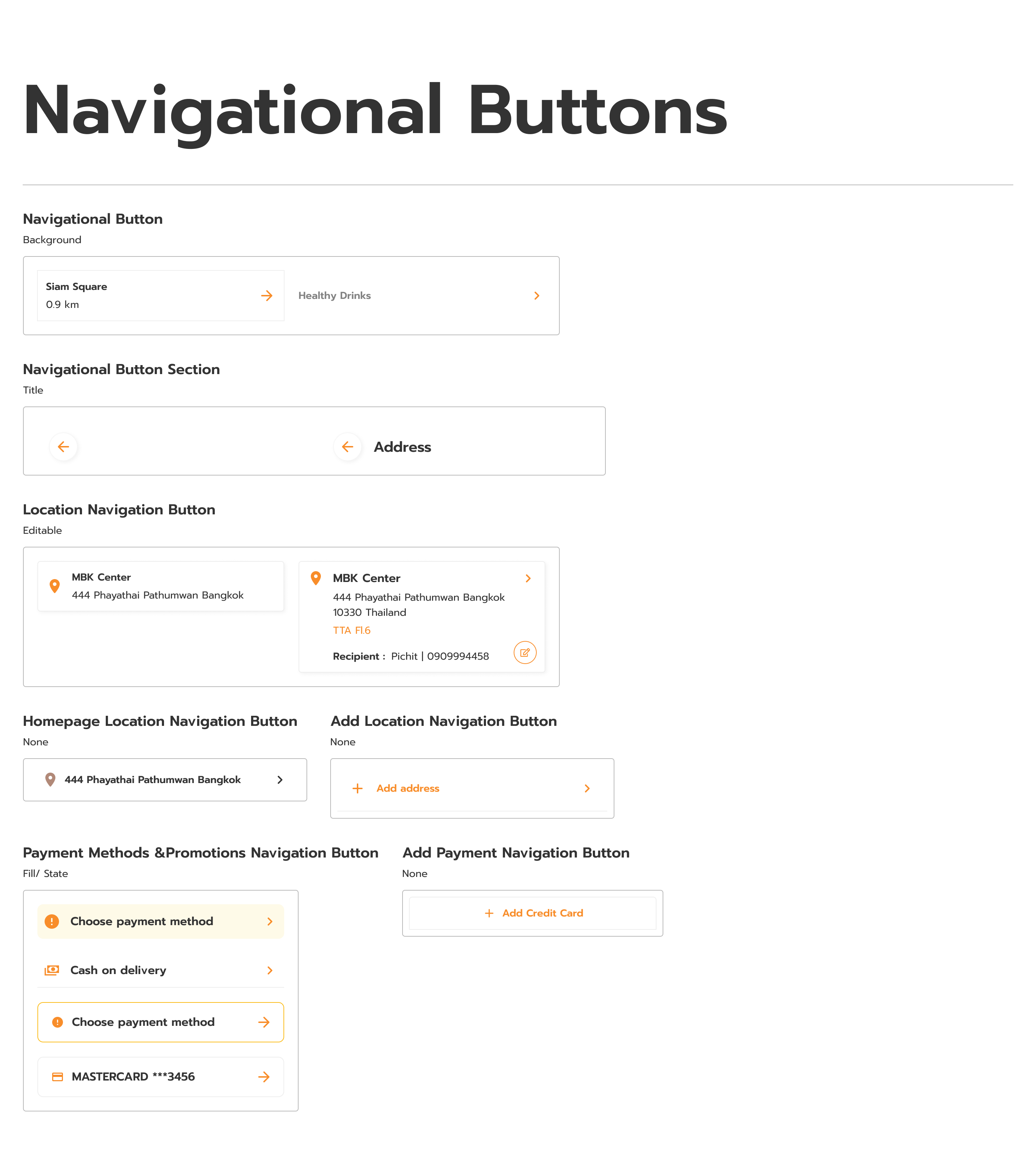
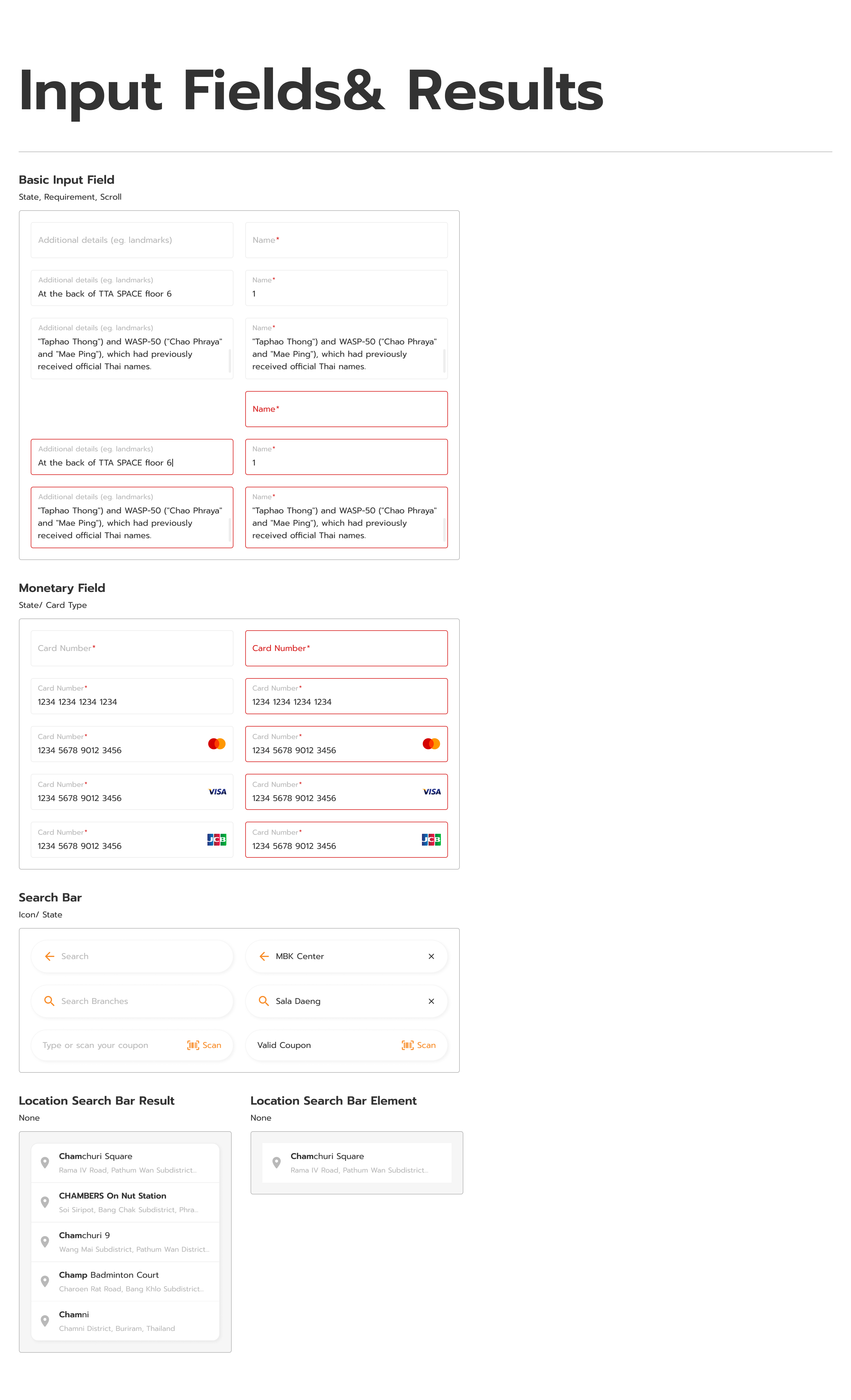
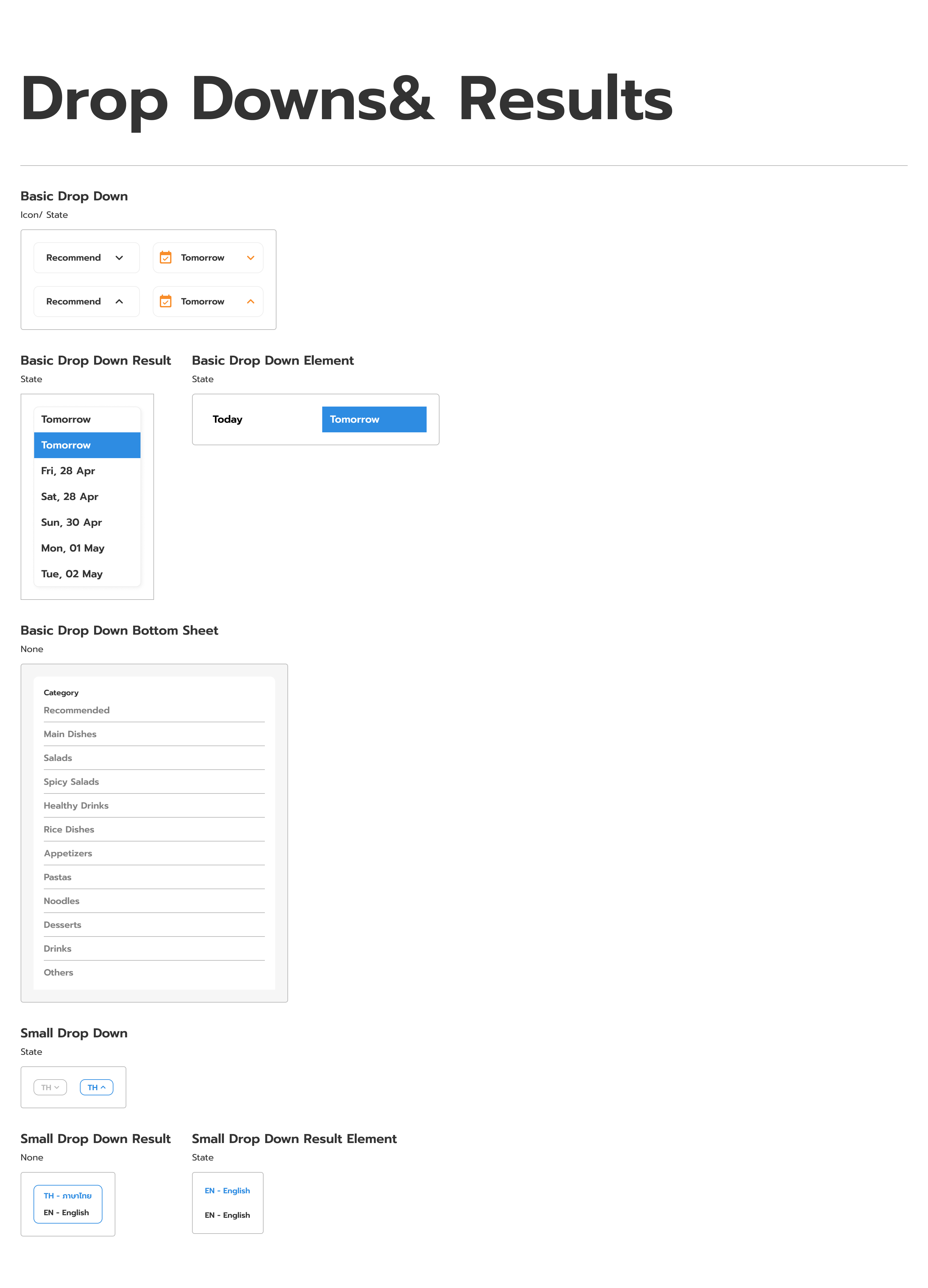
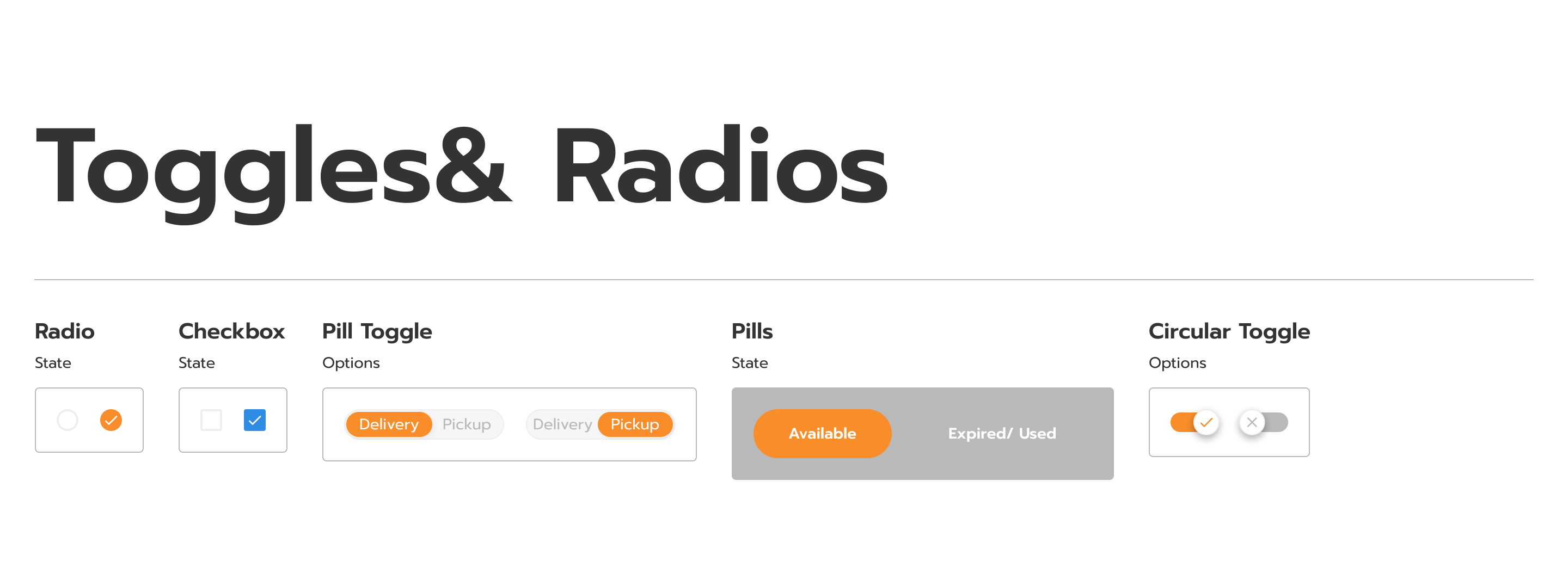
Built a modular Figma component system using design tokens and variables, enabling rapid white-label re-theming for each franchise identity.
Built a modular Figma component system using design tokens and variables, enabling rapid white-label re-theming for each franchise identity.

2. Localization and Multi-Language support:
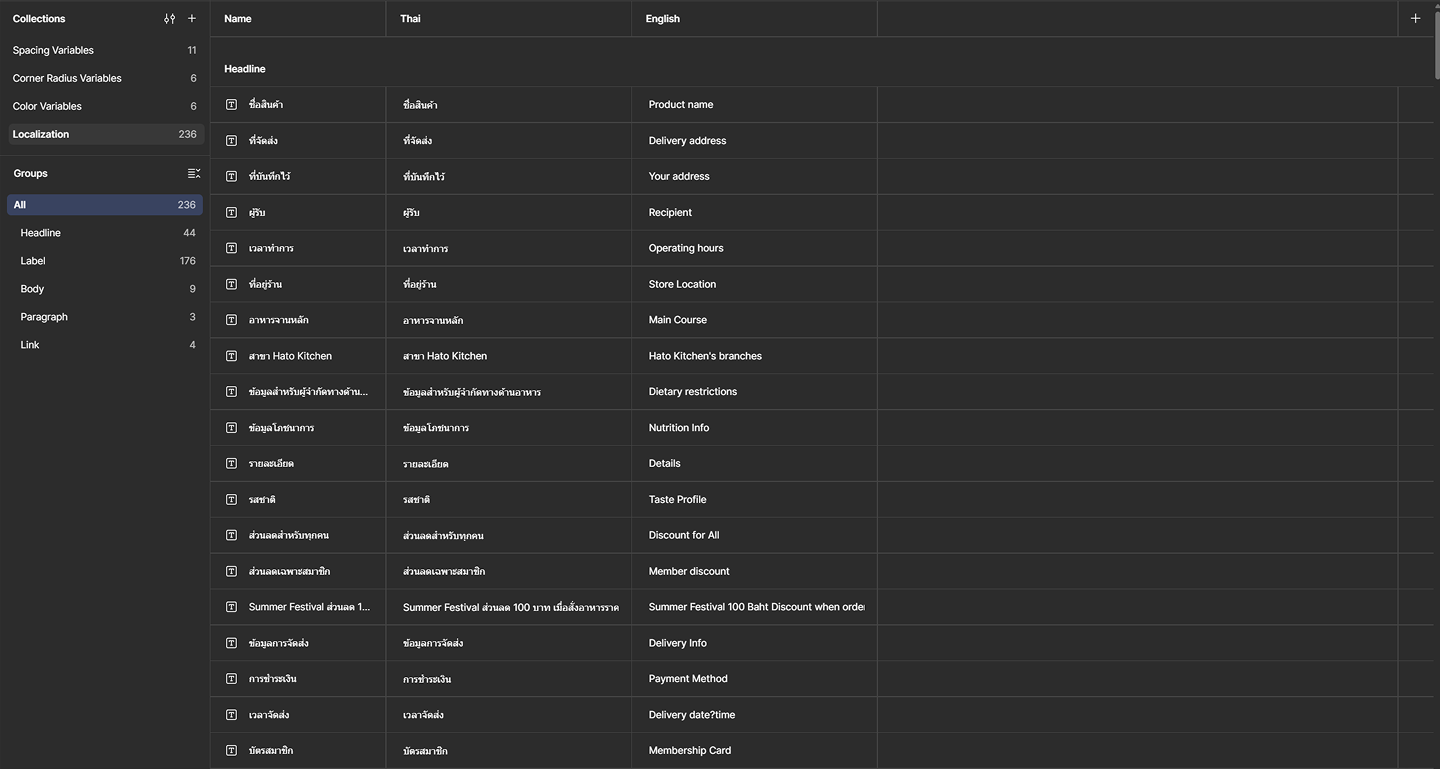
Engineered responsive typography scales and auto-layout containers to support dynamic switching between Thai and English without layout breakage.
Engineered responsive typography scales and auto-layout containers to support dynamic switching between Thai and English without layout breakage.
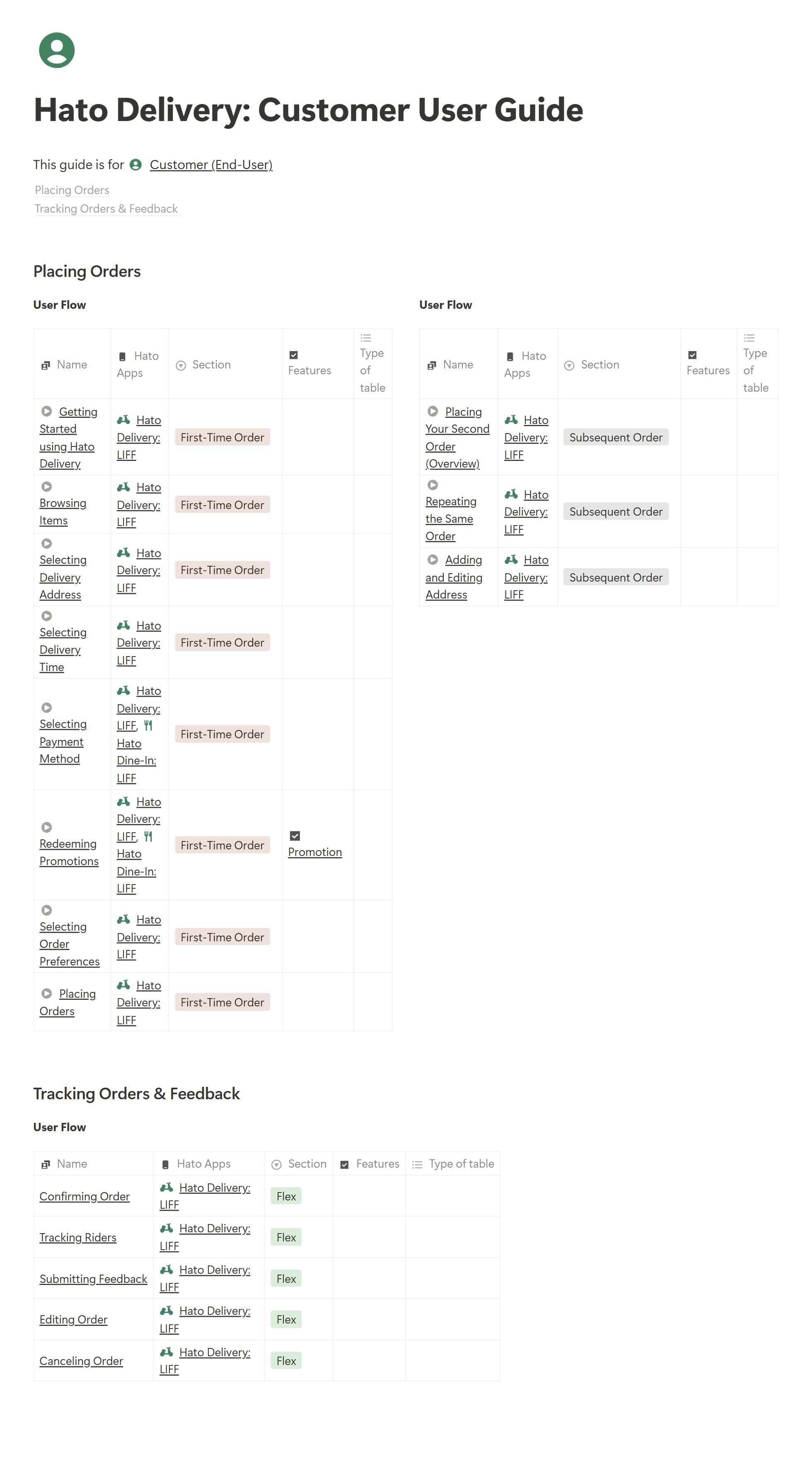
3. Handoff, Platform Architecture and Edge Cases (Notion ⇄ Figma)
Managed a centralized, linked Notion database for design handoffs and technical product documentation. It mapped high-level system logic and general platform mechanics alongside critical edge cases, including offline network dropouts, out-of-stock validations, and multi-device cart concurrency. Every spec linked directly back to deep component and flow documentation within the Figma design system, aligning engineering and QA teams on both holistic platform behavior and pixel-level states.
Managed a centralized, linked Notion database for design handoffs and technical product documentation. It mapped high-level system logic and general platform mechanics alongside critical edge cases, including offline network dropouts, out-of-stock validations, and multi-device cart concurrency. Every spec linked directly back to deep component and flow documentation within the Figma design system, aligning engineering and QA teams on both holistic platform behavior and pixel-level states.