Context and Core Problem
The rise of User-Generated Content (UGC) platforms has reshaped digital media, yet game development remains bottlenecked by fragmented tools. Creators typically navigate disjointed pipelines: buying assets on external web marketplaces, importing them into complex desktop engines, writing boilerplate logic, and managing separate platform hosting and monetization flows.Furthermore, existing web-based asset platforms often fail to bridge the gap between asset discovery and actual engine utility. Creators are forced to manually download, convert, and inspect file formats before knowing if an asset fits their game's aesthetic or performance constraints.
UX Strategy
To resolve these pipeline frictions, the UX architecture of Oriverse was built on three core pillars: Integrated Context, Direct Engine Handoff, and Scalable Design System Standards.
1. Global Search and Multi-Entity Discovery
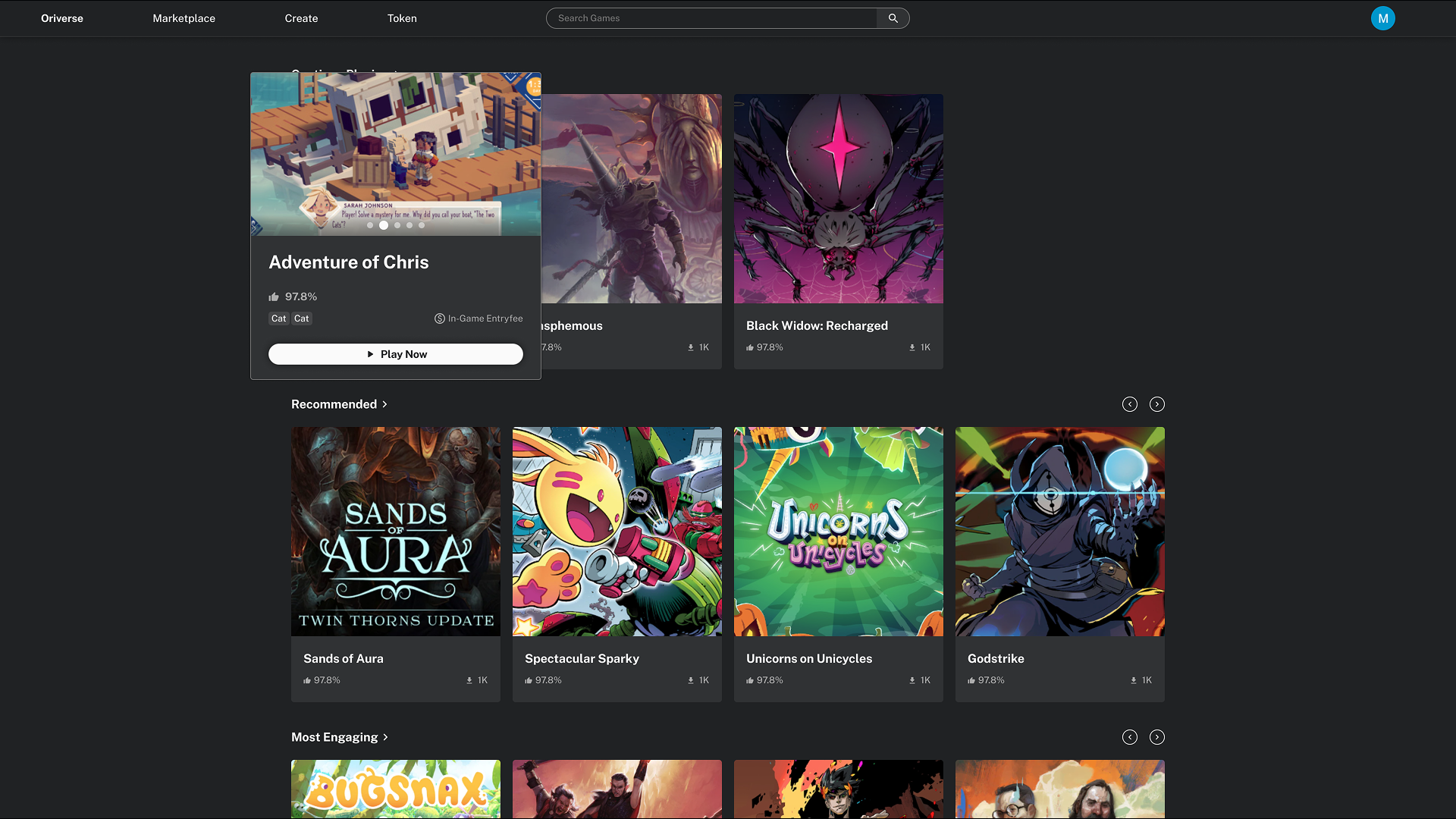
Traditional digital storefronts silo games, assets, and user profiles into separate sub-domains. Oriverse introduces a unified search architecture that parses queries dynamically into three contextual entities:
Games:Instant launch paths, entry-fee breakdown, play metrics, and media previews.
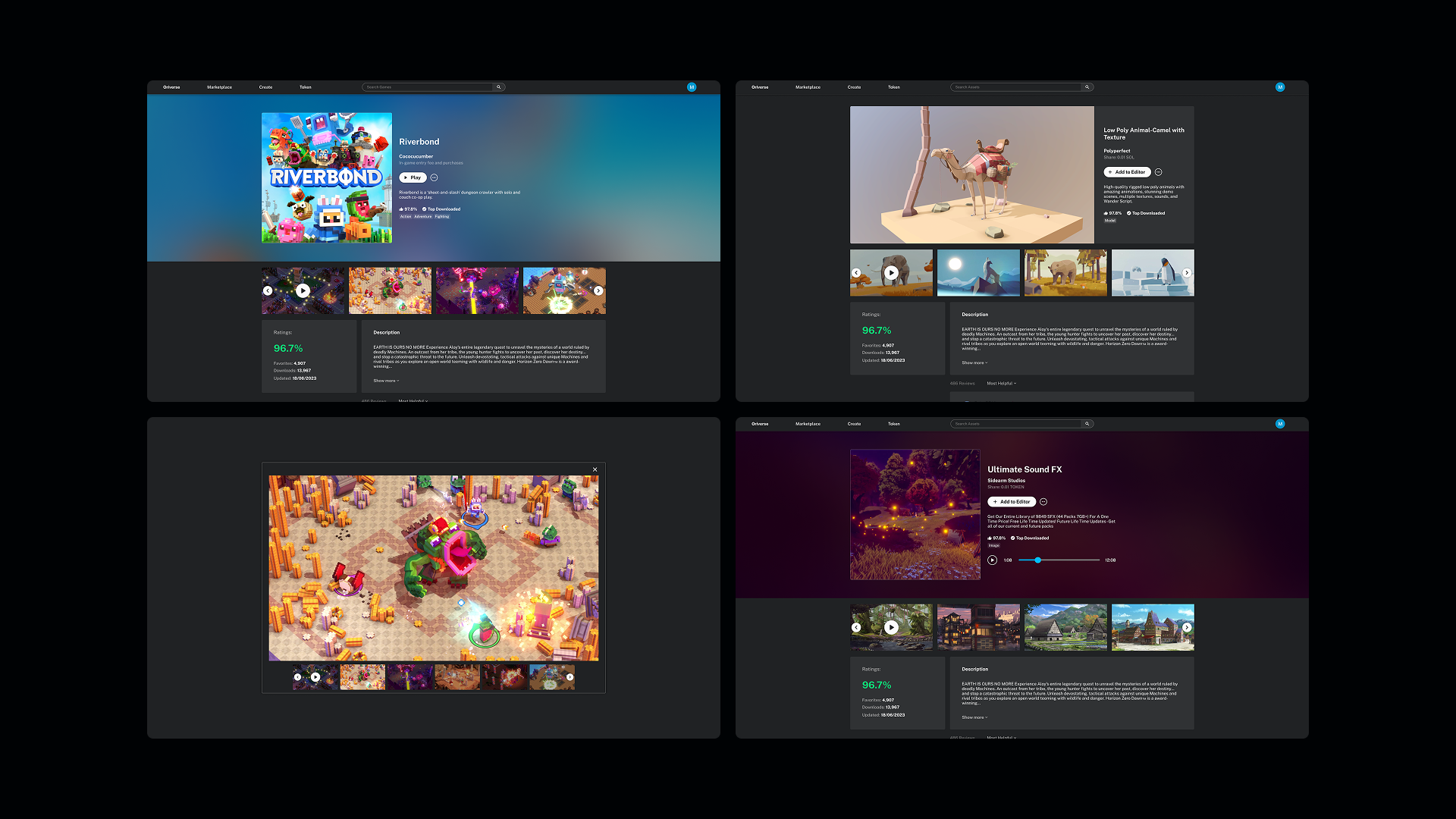
Marketplace Assets: 3D model previews, audio packs, and environment prefabs with one-click editor import.
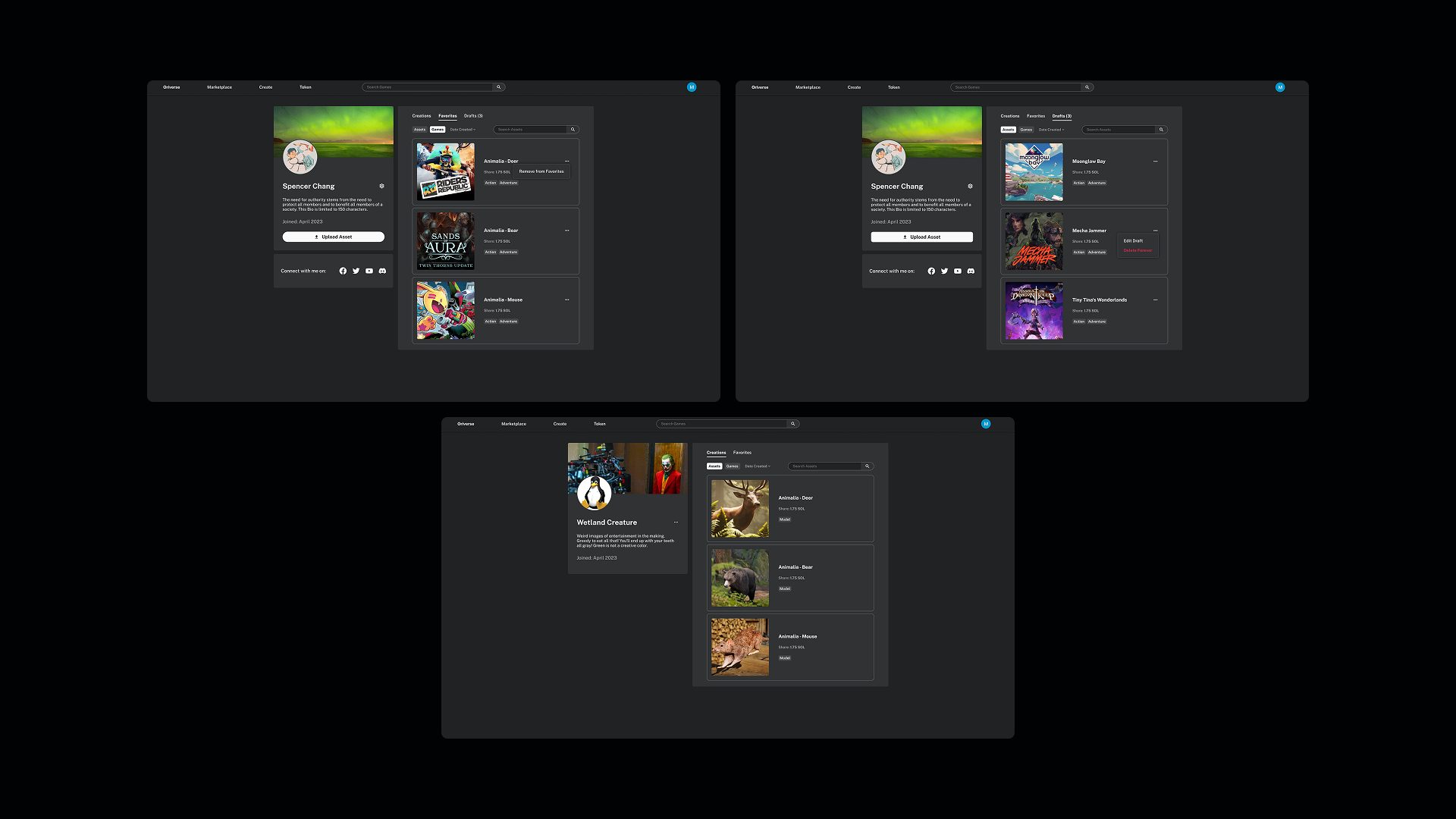
Accounts & Creators: Profile portfolios, asset history, and community social links.
2. Frictionless Engine Integration ("Add to Editor")
Rather than forcing manual asset downloads, every marketplace listing features a direct "Add to Editor" interaction. Whether inspecting a rigged 3D model, sound effect library, or environment building block, creators can add assets directly into their active game project drafts without leaving the web browser.
Rather than forcing manual asset downloads, every marketplace listing features a direct "Add to Editor" interaction. Whether inspecting a rigged 3D model, sound effect library, or environment building block, creators can add assets directly into their active game project drafts without leaving the web browser.
3. Transparent Creator Economics and Token UX
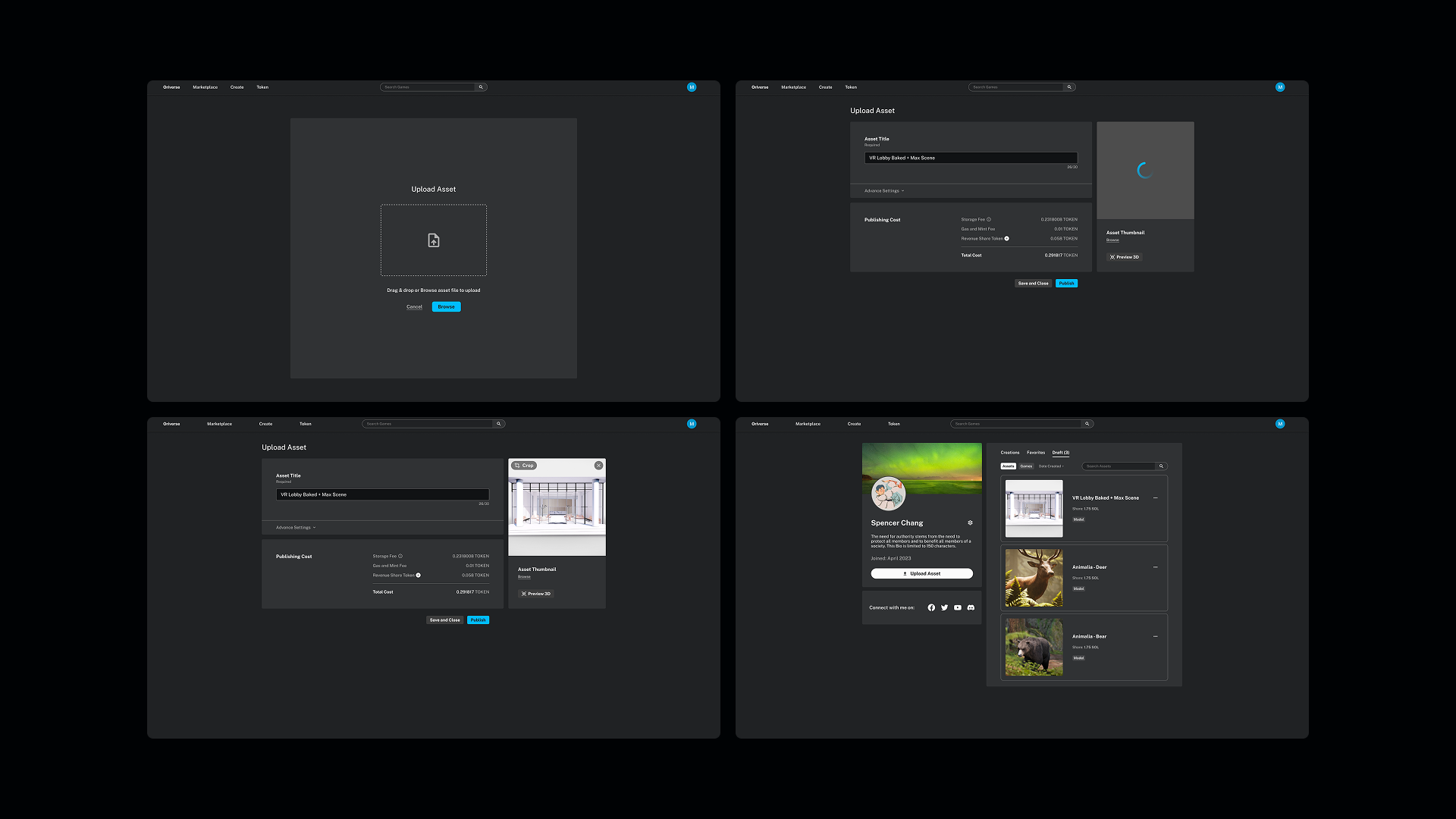
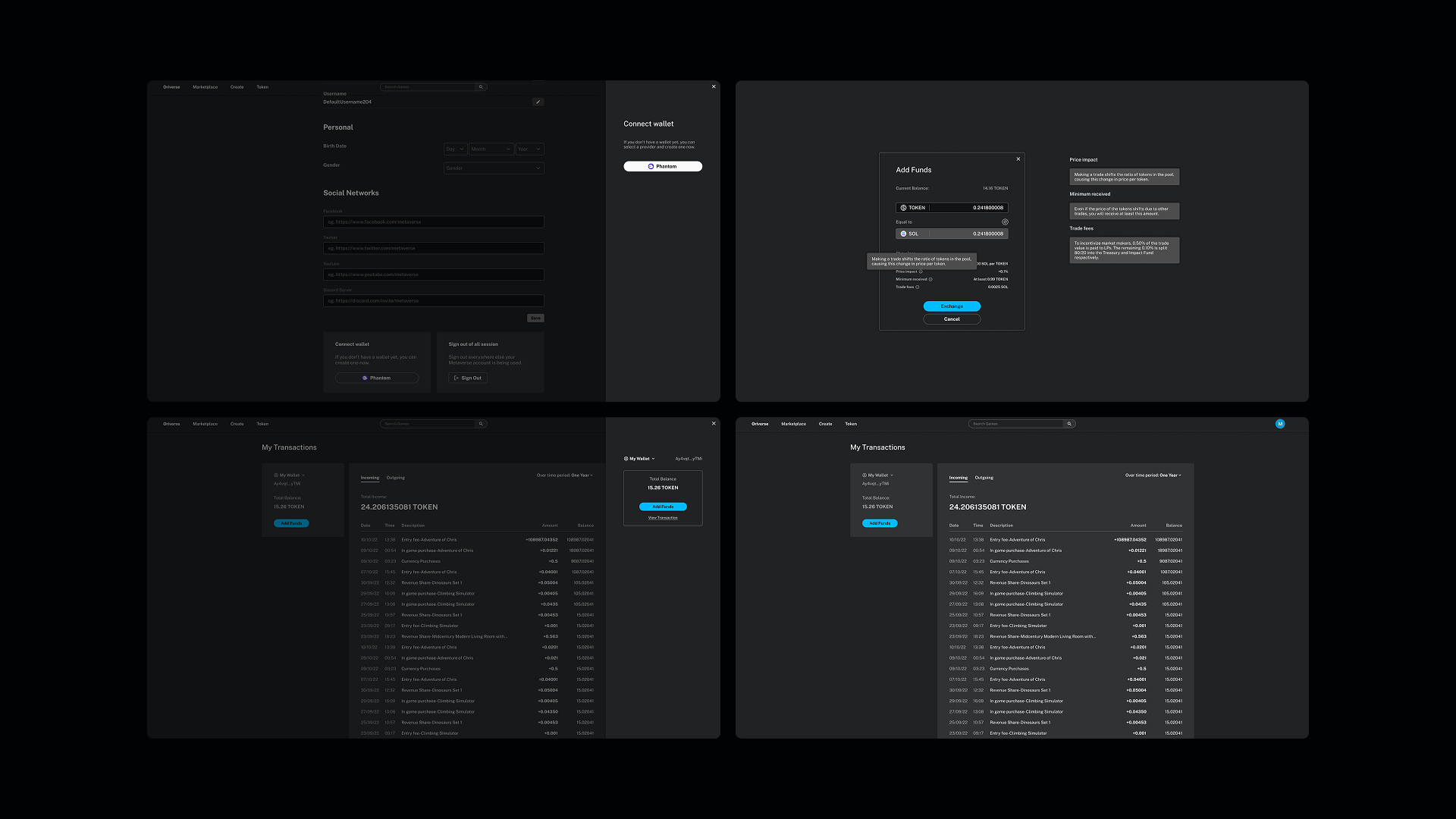
Integrating wallet connectivity and tokenized revenue streams required stripping away Web3 complexity. Transaction flows ranging from game entry fees to asset sales are presented via clear financial ledgers, upfront network/storage fee itemizations during asset publishing, and standard token-swap modals.
Integrating wallet connectivity and tokenized revenue streams required stripping away Web3 complexity. Transaction flows ranging from game entry fees to asset sales are presented via clear financial ledgers, upfront network/storage fee itemizations during asset publishing, and standard token-swap modals.
4. Multi-Device Design System and Mobile UX
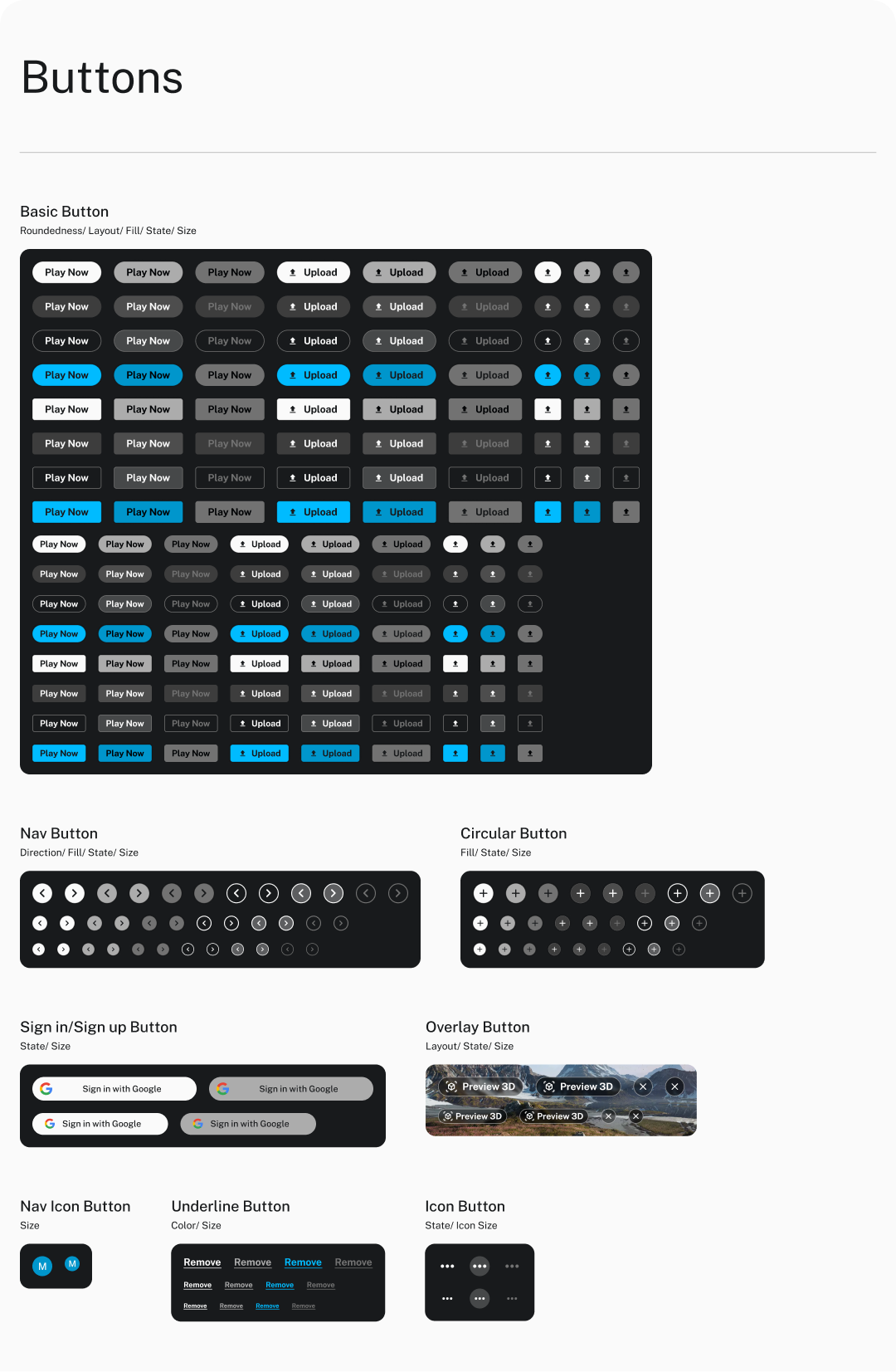
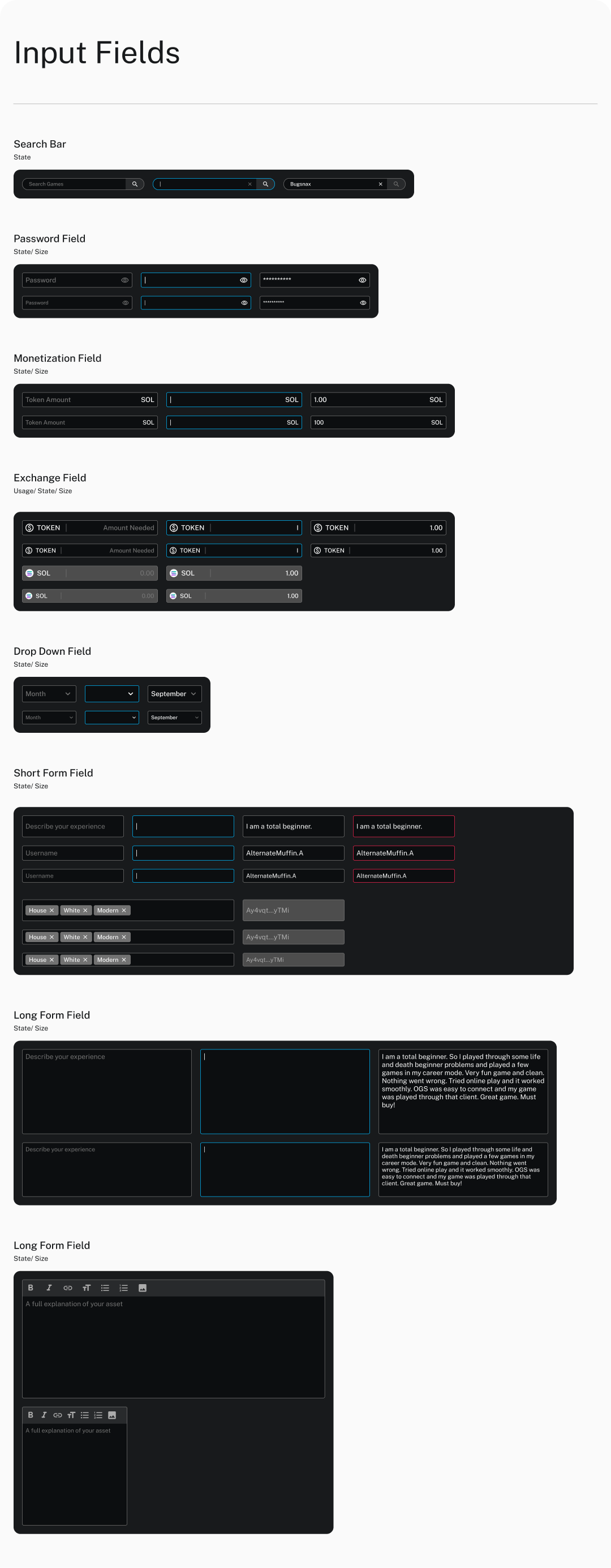
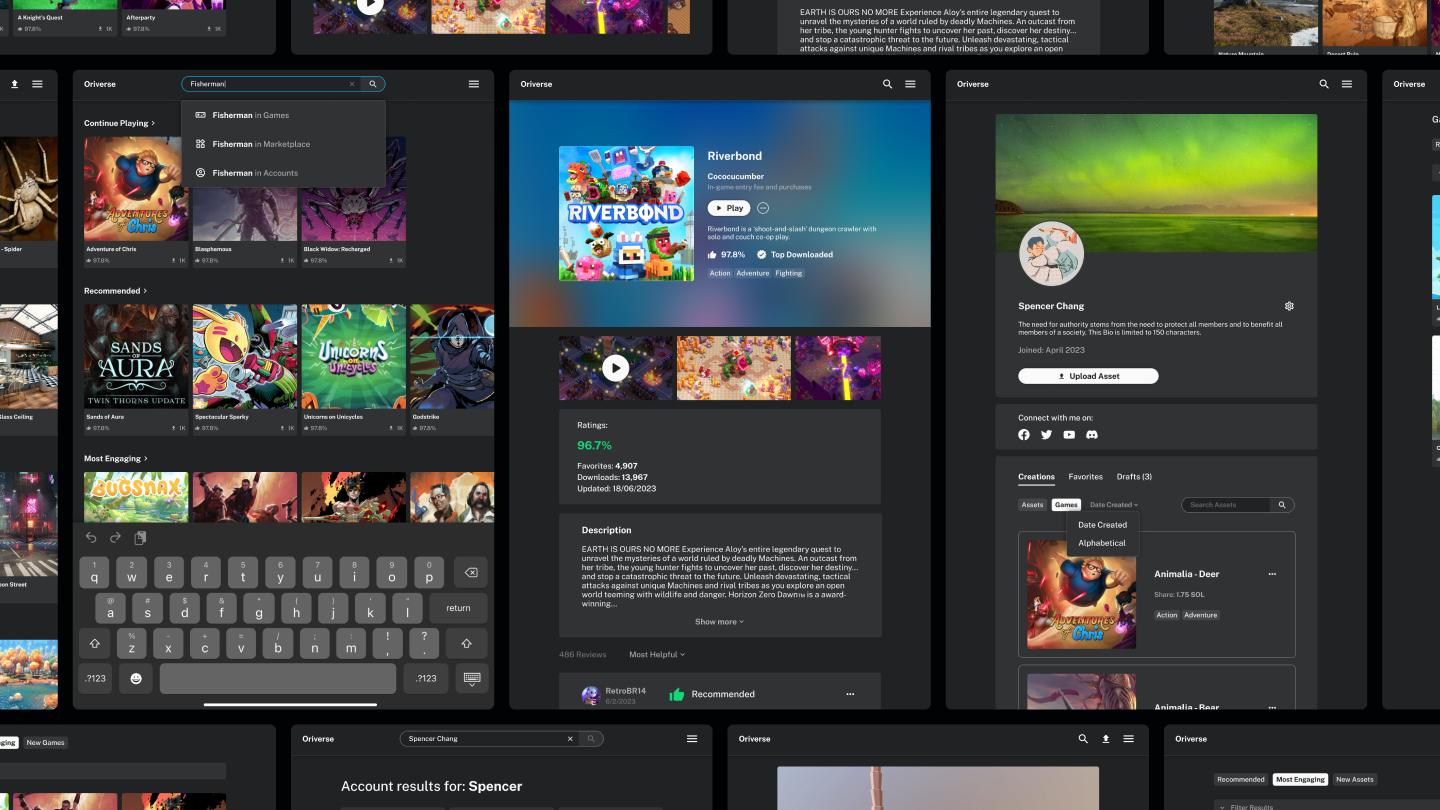
To support cross-platform accessibility across desktop to mobile, a component-driven design system was built from the ground up in collaboration with front-end and back-end engineers by adapting web navigation into responsive bottom sheets, mobile-optimized search overlays, and full-screen drawer menus for seamless browsing on smaller screens.
To support cross-platform accessibility across desktop to mobile, a component-driven design system was built from the ground up in collaboration with front-end and back-end engineers by adapting web navigation into responsive bottom sheets, mobile-optimized search overlays, and full-screen drawer menus for seamless browsing on smaller screens.

Cross-Platform Design System
To support rapid product iteration across both desktop and mobile web applications, a comprehensive UI design system was established.